
Media Literacy
A Nut Graf Explains Why a News Story Matters After the Opening
A vivid opening may show one person’s experience. The nut graf tells you what larger question the report is asking and why that example belongs there.

Read beyond the noise.
Trace a shared headline back to its original publication, separate event and update dates, and check whether the claim still describes the present.
A vivid opening may show one person’s experience. The nut graf tells you what larger question the report is asking and why that example belongs there.

The word Pool in a photo credit explains a shared reporting arrangement. Learn what it tells you about access, viewpoint and repeated images.

Searching an old newspaper? Record the edition as well as the date so a morning, evening or regional copy does not send you to the wrong page.

Learn to recognise native advertising labels, separate a sponsor’s involvement from independent reporting, and check the evidence behind a useful-looking article.

A pool report lets many newsrooms share limited access. Learn what it records, what it cannot establish, and how to read its attribution.

A turnout percentage changes with the population beneath it. Compare registered voters, voting-age adults and eligible voters before comparing headlines.

Read an exclusive label by identifying the new interview, document or finding, then follow the evidence and original reporting.
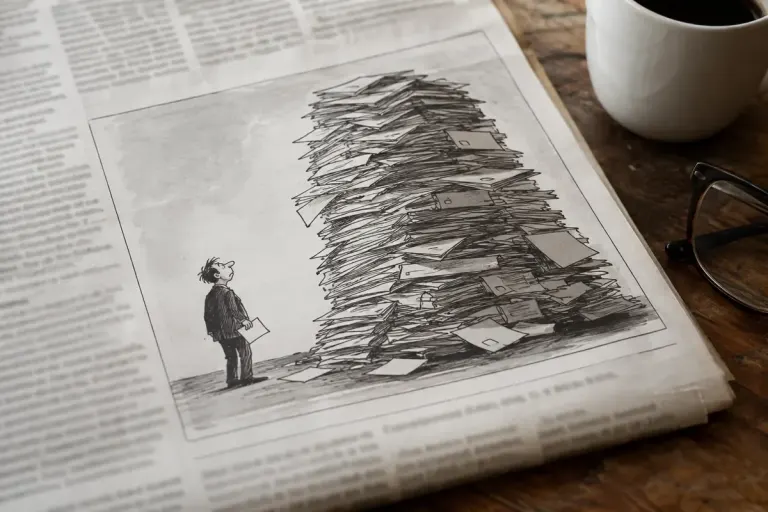
Learn to read an editorial cartoon’s visual argument by separating its symbols, exaggeration and evidence from the event it comments on.

Check a news image’s date, place and original caption before accepting the claim attached to it, even when the photograph itself appears authentic.