
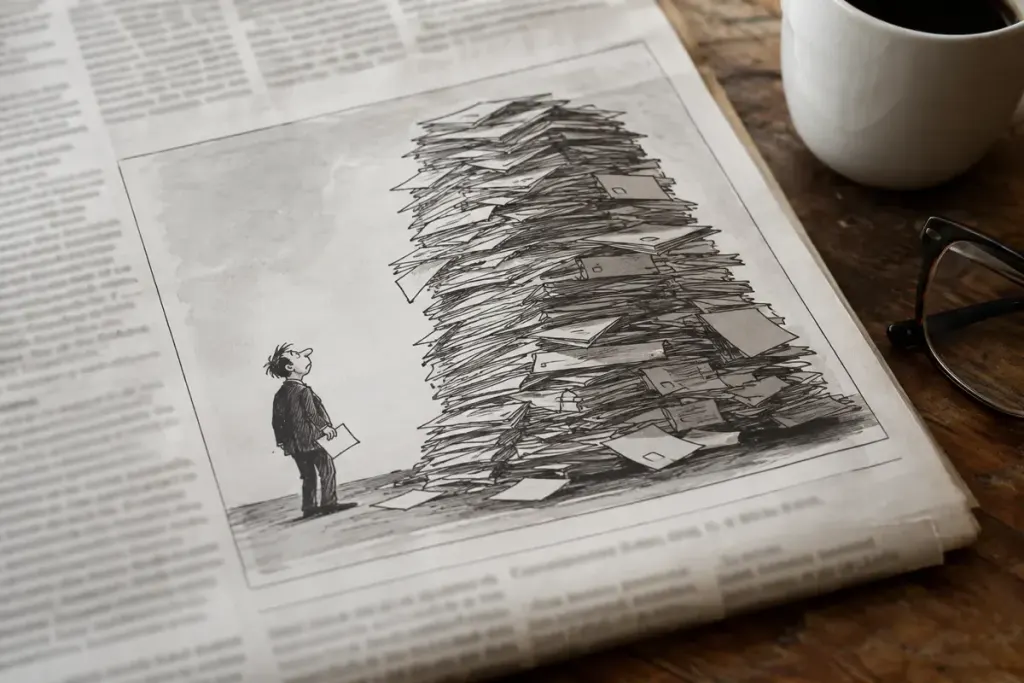
A tiny figure stands beneath a mountain of paperwork. No mountain actually exists, yet the cartoon makes a claim about the experience of dealing with an institution. Reading it well means identifying that claim before deciding whether you agree.
An editorial cartoon can combine observation, interpretation and exaggeration in one frame. The Library of Congress’s classroom guide asks readers to examine techniques including symbols, caricature and irony. Those techniques are the machinery of the argument, not evidence that every depicted detail happened literally.
Describe before you interpret
Start with what is visibly present: people, objects, labels, scale and position. Then ask what each element might represent. A locked door could suggest exclusion; an oversized desk could suggest institutional power. The surrounding words and publication context help determine whether that reading is plausible.
Keep uncertainty visible. “The door may represent access to the service” is more careful than claiming to know the artist’s intention from an isolated screenshot. Check the date, credited cartoonist, publication and original caption where available.
Turn the image into a sentence you can examine
For the invented paperwork example, a possible interpretation is: “The application process overwhelms the person it is supposed to serve.” Now you have a proposition to discuss. Which part of the image supports it? What context would a reader need? Whose experience is absent?
Next separate the argument’s force from its factual support. A memorable drawing may make a criticism easy to understand without proving how common the problem is. Look to reporting, documents or relevant data for factual claims that the picture itself cannot establish.
Finally, try stating the strongest reasonable alternative interpretation. Perhaps the paperwork represents necessary checks rather than needless obstruction. You do not have to endorse that view. Considering it helps reveal which assumptions make the cartoon persuasive, and where your own agreement began before you had examined the image.