
Media Literacy
Sponsored content needs a label readers can recognise before the click
Learn to recognise native advertising labels, separate a sponsor’s involvement from independent reporting, and check the evidence behind a useful-looking article.

Read beyond the noise.
Learn to recognise native advertising labels, separate a sponsor’s involvement from independent reporting, and check the evidence behind a useful-looking article.

A pool report lets many newsrooms share limited access. Learn what it records, what it cannot establish, and how to read its attribution.

The coefficient of variation expresses spread relative to the mean. See an example, then learn when a relative comparison becomes misleading.

Work through a small winsorization example and learn why capping extreme observations changes an average without reducing the number of rows in the dataset.
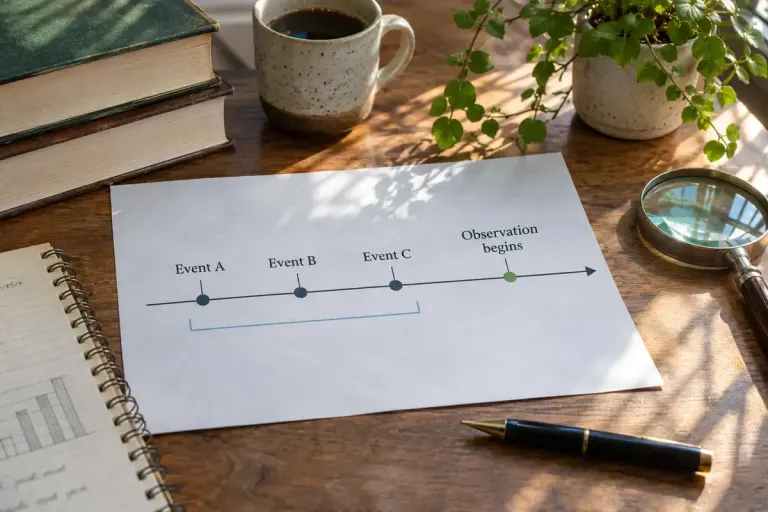
A dataset can begin after some people or organisations have already left. Learn how left truncation differs from an unfinished follow-up.

Before crediting a new policy for a rebound, ask how the starting group was selected and whether an unusually extreme result shaped the comparison.

A population pyramid shows age and sex structure, not just a country’s size. Read its scale, date and unusual bulges before drawing conclusions.

A panel survey follows participants over time. Check who remains in later waves before interpreting a headline about how people’s lives have changed.

A trimmed mean removes specified observations from the tails before averaging. Work through a small example and learn what to check in a published statistic.