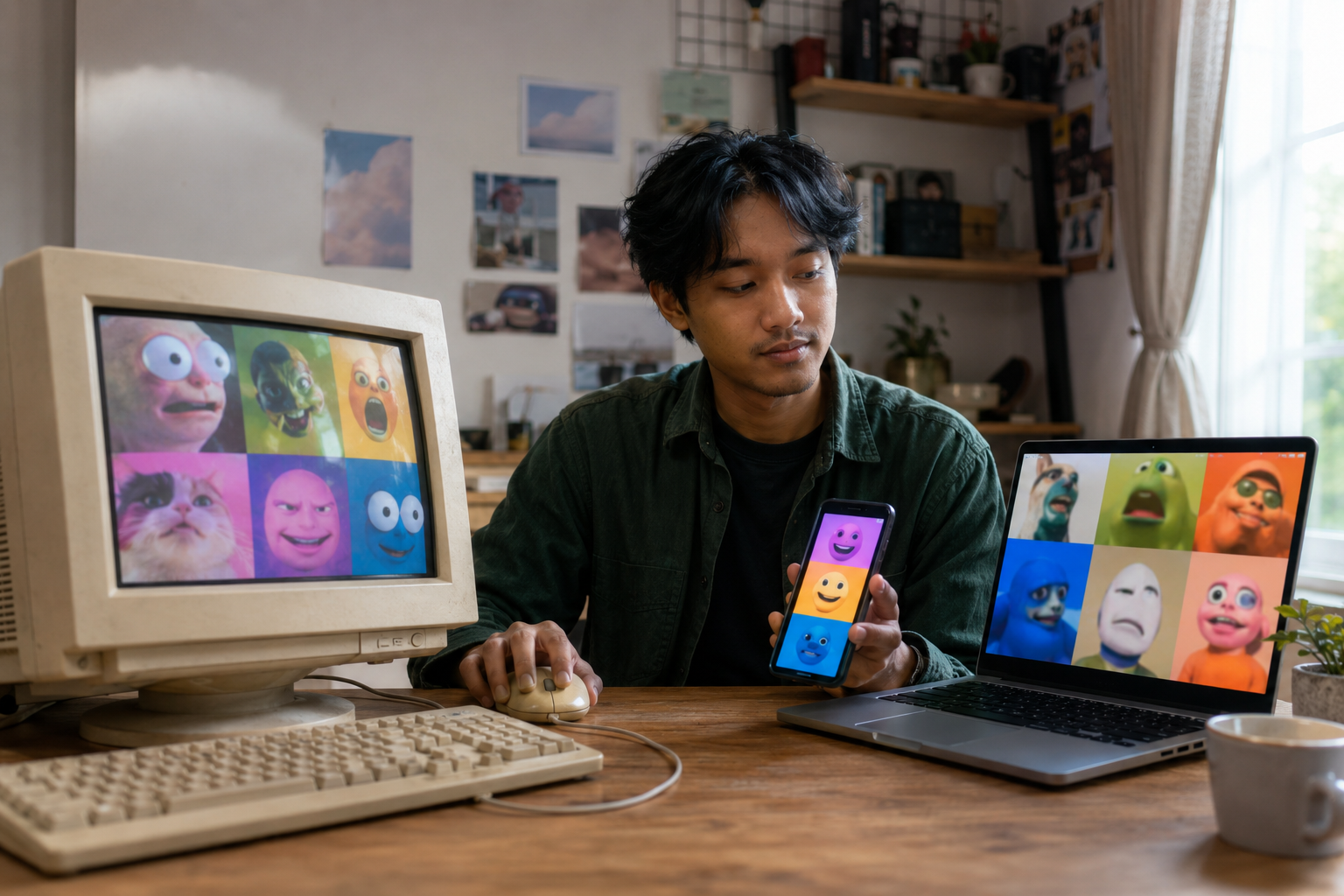
Before timelines, reaction images, and short videos dominated our screens, memes already existed as a way for people to copy, modify, and spread cultural ideas. The internet simply accelerated that process until a single joke could travel around the world within hours.
Today, memes are more than disposable entertainment. They document public moods, political events, celebrity moments, generational humor, and even changes in technology. To understand how this visual language became so influential, let us trace its development from its academic origins to the algorithm-driven era.
1976: The Word “Meme” Appears Before the Internet Boom
The history of memes does not begin with social media. The term “meme” was introduced by evolutionary biologist Richard Dawkins in his 1976 book, The Selfish Gene. He used it to describe a unit of culture that spreads from one person to another through imitation.
A melody, fashion trend, popular phrase, or social custom could all be considered a meme. Like genes, these cultural elements survive when people continue copying and transmitting them.
Dawkins was not specifically talking about funny images. However, his concept became the foundation for what we now understand as internet memes: ideas that are repeated, altered, and shared across communities.
This early definition helps explain why the history of popular memes is not merely a collection of online jokes. It is also a record of how digital communities communicate and reshape cultural material.
The 1980s: Emoticons Become Early Digital Expressions
In 1982, computer scientist Scott Fahlman suggested using 🙂 and 🙁 to distinguish jokes from serious messages on an online bulletin board. These combinations of punctuation marks eventually became known as emoticons.
Emoticons were simple, but they solved an important problem. Text-based communication lacked facial expressions and vocal tone, so users needed another way to show emotion.
Over time, people created countless variations, from playful winks to elaborate faces. These symbols were not memes in the modern image-macro sense, but they demonstrated how online communities could collectively develop and repeat recognizable visual codes.
Long before reaction GIFs arrived, a tiny sideways smile was already doing much of the same work.
1996: Dancing Baby Introduces the Viral Loop
One of the earliest widely recognized internet memes was the Dancing Baby, also known as Baby Cha-Cha-Cha. The short animation showed a computer-generated infant performing an awkward dance.
Originally created as a demonstration of 3D animation software, the clip began circulating through email chains and websites in 1996. Its strange combination of technical novelty and accidental comedy made it irresistible.
The animation became even more famous after appearing on television. This crossover demonstrated that online material could escape computer screens and enter mainstream popular culture.
The Dancing Baby remains an important milestone in the origins of internet memes because it established a pattern that still exists today: an unusual piece of media is discovered, copied repeatedly, and transformed into a shared cultural reference.
1998–2001: Early Websites Create Participatory Meme Culture
In 1998, the Hampster Dance website appeared with rows of animated hamsters dancing to a sped-up song. The page was visually chaotic, musically repetitive, and nearly impossible to forget.
Around the same period, “All Your Base Are Belong to Us” spread through online forums. The phrase came from a poorly translated line in the video game Zero Wing. Users inserted it into edited images, animations, and forum discussions.
These early memes revealed an essential feature of internet humor: participation. Audiences were no longer satisfied with simply viewing a joke. They wanted to remix it, place it in a new context, and pass their version to another community.
This process transformed users from passive spectators into active creators.
The Early 2000s: Image Macros Establish a Familiar Format
As internet forums and image-sharing platforms grew, image macros became increasingly popular. The format usually featured a recognizable picture accompanied by large text at the top and bottom.
Characters such as Bad Luck Brian, Success Kid, Scumbag Steve, and Socially Awkward Penguin represented familiar situations or personality types. Users could understand the premise almost immediately and create new captions without changing the central image.
The simplicity of the format encouraged mass participation. Anyone with basic editing tools could contribute a variation.
Image macros made memes modular. The picture supplied the emotional framework, while the caption allowed users to adapt the joke to school, work, relationships, gaming, or everyday frustration.
2007: Rickrolling Turns Misdirection Into a Global Joke
Rickrolling became one of the defining internet pranks of the late 2000s. Users were promised a useful link, breaking news, or an exciting video. Instead, the link opened Rick Astley’s 1987 music video for “Never Gonna Give You Up.”
The joke worked because it combined surprise, repetition, and collective recognition. After encountering it once, users immediately understood what had happened. Many then repeated the trick on someone else.
Rickrolling demonstrated that a meme did not require a captioned image. It could also function as an action or ritual in which the audience unknowingly participated.
Years later, the prank remains recognizable, proving that a strong viral internet phenomenon can survive long after the platform or trend that popularized it begins to fade.
2008–2012: Rage Comics Give the Internet a Cast of Characters
Rage Comics became highly visible across forums and social platforms during the late 2000s and early 2010s. These simple comics used recurring faces such as Trollface, Forever Alone, Me Gusta, and Rage Guy.
The drawings were intentionally crude. Their appeal came from emotional clarity rather than artistic detail. A single exaggerated face could communicate embarrassment, anger, loneliness, satisfaction, or mischievous behavior.
Users arranged the faces into short stories about everyday experiences. School problems, failed conversations, awkward dates, and household annoyances became miniature digital dramas.
Rage Comics helped establish the internet’s growing collection of reaction characters. They also proved that meme culture could develop its own visual vocabulary, understood even by people who had never met.
2010–2013: Doge Makes Absurd Language Adorable
Doge originated from photographs of Kabosu, a Shiba Inu with a memorable sideways expression. The images were paired with colorful Comic Sans phrases such as “such wow,” “very skill,” and “much impressive.”
The deliberately broken grammar became part of the joke. Instead of describing the dog normally, captions appeared to reveal its scattered internal monologue.
Doge spread widely around 2013 and became one of the most recognizable memes of its generation. Its influence eventually extended into merchandise, advertising, cryptocurrency, and mainstream media.
The popularity of Doge illustrates how online humor culture often creates new grammatical rules. The strange language was technically incorrect, yet millions of users understood exactly how to produce and interpret it.
2012–2015: Reaction GIFs Capture Emotion in Motion
As faster connections and social platforms made animation easier to share, reaction GIFs became a dominant form of online communication. Short clips of actors, reality-show participants, athletes, and cartoon characters were reused to express specific emotions.
A dramatic stare could signal suspicion. Slow applause could express sarcastic approval. Someone walking out of a room could represent frustration or complete disbelief.
Reaction GIFs made digital conversations feel more expressive. Instead of writing several sentences, users could respond with a few seconds of perfectly selected movement.
They also changed the relationship between entertainment and audience participation. A scene originally created for a film or television show could gain an entirely new meaning after becoming a reaction.
2015: Drake Hotline Bling Becomes a Universal Comparison Template
The music video for Drake’s “Hotline Bling” produced one of the decade’s most adaptable meme formats. Two screenshots were placed together: Drake rejecting something in the first panel and approving something in the second.
The structure was instantly readable. The top panel represented an unwanted option, while the bottom panel showed the preferred alternative.
Users applied the template to almost every imaginable subject, including food, technology, work habits, fandoms, education, and politics. Brands also adopted it because the format communicated a comparison without requiring much explanation.
Its success showed that memorable social media meme trends often depend on a clear visual structure. The easier a template is to understand and customize, the more likely it is to spread.
2017: Distracted Boyfriend Turns a Stock Photo Into a Story
The Distracted Boyfriend meme used a stock photograph of a man looking at another woman while his visibly annoyed partner watched him. Users labeled each person to represent temptation, neglected responsibilities, or changing priorities.
Although the photograph had originally been created for commercial stock-image purposes, meme creators transformed it into a universal storytelling device.
Its composition contained an entire narrative in a single frame: someone abandons an existing commitment after discovering a more attractive option.
This flexibility allowed the image to represent everything from procrastination to shifting political loyalties. It became a clear example of how online communities can detach an image from its original purpose and assign it a completely new cultural identity.
2019: Woman Yelling at a Cat Perfects the Two-Image Argument
The Woman Yelling at a Cat meme combined two unrelated images. One showed an emotional moment from reality television, while the other featured a confused-looking cat sitting behind a plate of vegetables.
Placed side by side, the images appeared to form an argument. Users added captions that turned the confrontation into conversations between parents and children, customers and employees, or logical thinking and impulsive decisions.
The meme succeeded because the contrast was immediate and theatrical. One side appeared furious, while the other seemed bewildered and defensive.
It also demonstrated that meme creators did not need content from the same source. Completely unrelated images could be merged to create a fresh narrative.
2020: Pandemic Memes Become a Collective Coping Mechanism
During the COVID-19 pandemic, meme culture became especially important. People used humor to process lockdowns, video meetings, empty public spaces, disrupted routines, and the strange experience of losing track of time.
Memes about working from bed, forgetting which day it was, or struggling with unstable internet connections reflected experiences shared across countries.
This period showed that memes could offer more than quick laughter. They provided a sense of solidarity during uncertainty. Seeing thousands of people joke about the same difficulty made isolation feel slightly less lonely.
The role of memes as a coping mechanism became a major part of the broader evolution of digital culture. Humor allowed communities to discuss anxiety without always addressing it in a formal or overwhelming way.
2021: Bernie Sanders’ Mittens Demonstrate Real-Time Remixing
During the 2021 United States presidential inauguration, a photograph of Bernie Sanders sitting with crossed arms and wearing knitted mittens quickly spread online.
Within hours, users edited him into movie scenes, paintings, historical photographs, public transportation, and fictional worlds. The meme moved rapidly because the seated figure was visually distinctive and relatively easy to insert into different backgrounds.
This moment demonstrated the speed of modern meme production. A public event could occur in the morning and generate thousands of polished variations before the day ended.
Memes were no longer reacting to history after the fact. They had become part of how people experienced major events in real time.
The 2020s: TikTok and Short Videos Accelerate Meme Evolution
The growth of TikTok, Reels, and other short-video platforms changed the basic form of memes. A meme could now be a sound clip, dance movement, camera angle, editing style, facial expression, or storytelling formula.
Users reused the same audio while adding different situations. The original meaning of a sound could disappear as communities repeatedly reinterpreted it.
Algorithms also increased the speed of circulation. Instead of depending primarily on followers or forum membership, a meme could be recommended to millions of strangers based on viewing behavior.
As a result, the lifespan of many memes became shorter. A trend could appear, peak, become overused, and be declared outdated within days.
From Templates to “Brainrot” and Layered Inside Jokes
Recent meme culture is increasingly self-referential. Many jokes combine distorted audio, intentionally poor editing, obscure characters, and references to previous memes.
To outsiders, these posts can seem meaningless. For regular participants, their apparent nonsense is precisely what makes them entertaining.
Terms such as “brainrot” describe the experience of repeatedly consuming highly specific or absurd content until its language becomes part of everyday conversation. Catchphrases escape their original videos and appear in comments, private chats, classrooms, and workplaces.
This style reflects the development of modern viral culture into a fast-moving collection of overlapping communities. Understanding the joke often depends on recognizing several earlier references at once.
Why Some Memes Survive While Others Disappear
Not every viral post becomes a lasting meme. The most durable examples usually combine emotional clarity, adaptability, and a recognizable structure.
A successful meme gives users room to participate. People must be able to change the caption, replace the subject, reuse the sound, or apply the format to a new situation.
Timing also matters. Memes spread more easily when they capture a shared mood or respond to an event that many people are already discussing.
However, excessive exposure can rapidly weaken a joke. Once companies, public institutions, and distant relatives begin using a meme, younger communities may abandon it and search for a less familiar alternative.
Memes as the Folk Culture of the Digital Age
From the Dancing Baby to short-form video trends, memes have evolved alongside the internet itself. Each generation of platforms has introduced new tools, formats, and communities, but the central process has remained surprisingly consistent.
Someone creates or discovers an interesting piece of content. Others copy it, modify it, and attach new meaning. The strongest variations spread until the reference becomes part of a shared cultural vocabulary.
That is why the complete story of meme culture deserves to be studied as more than a history of jokes. Memes preserve reactions to technology, politics, entertainment, and everyday life in a form that is informal, collaborative, and constantly changing.
Tomorrow’s most famous meme may begin as an accidental photograph, a forgotten clip, or a five-second sound uploaded by an unknown creator. If the internet recognizes itself in that tiny moment, the remixing will begin—and another chapter of digital history will be written.