The first time you see it, you barely react.
It is a strange image.
A badly edited video.
A sentence that does not seem particularly clever.
Someone repeats the same sound three times.
The comments are full of people apparently losing their minds over it.
You scroll past.
Then you see it again.
Different account.
Same joke.
Later that evening, somebody sends a variation to your group chat.
The next morning, another version appears.
Three days later, you understand the reference immediately.
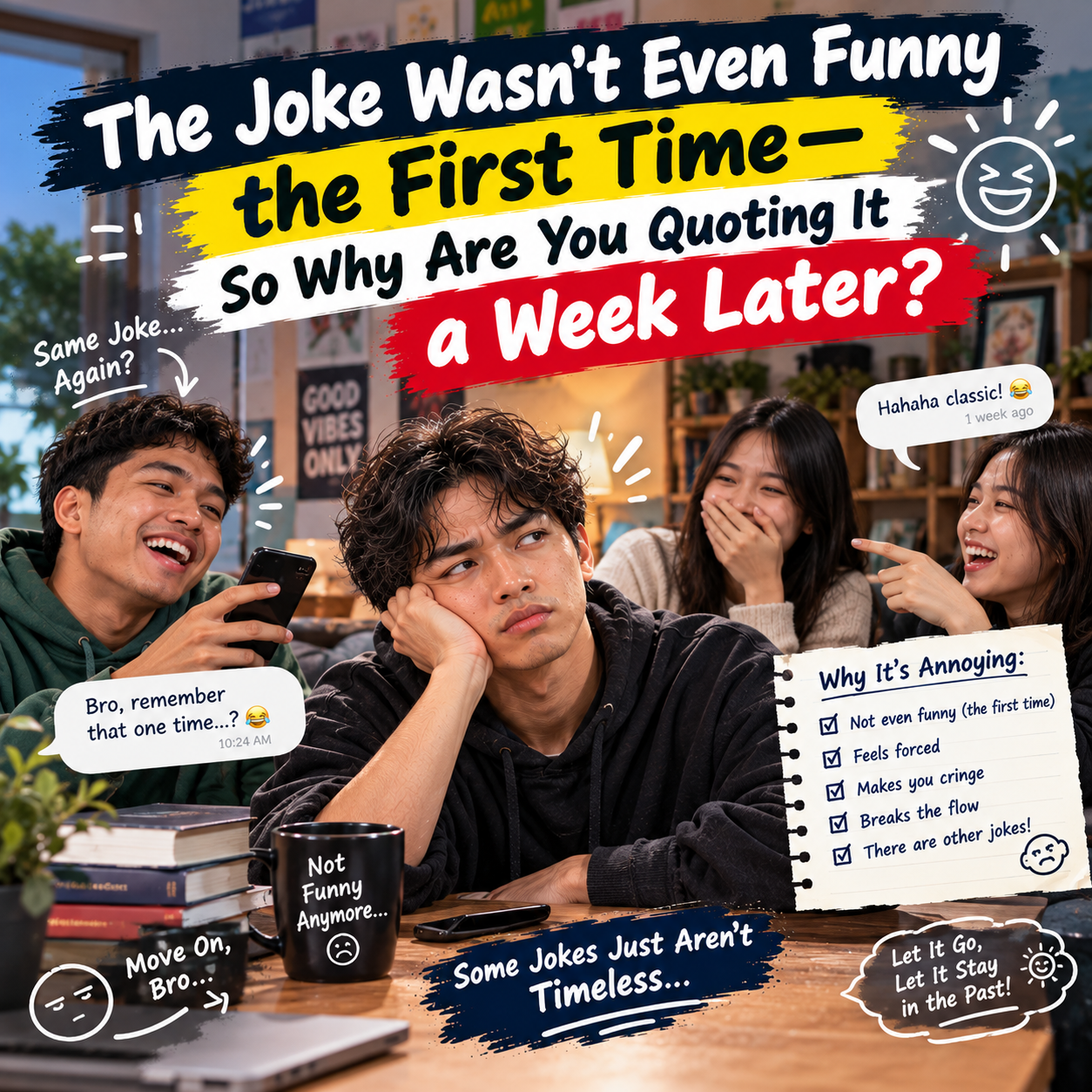
A week later, you are using it yourself.
Nothing about the original joke necessarily became funnier.
What changed was your relationship with it.
That strange transformation sits at the center of internet meme culture.
Online humor does not always spread because everyone encounters something brilliant and independently decides it is hilarious. Sometimes a joke becomes funny through repetition, participation, variation, recognition, and the feeling that you are now part of a conversation happening everywhere at once.
The meme stops being only a joke.
It becomes a language.
A Meme Rarely Stays the Same for Long
Traditional jokes usually have a recognizable structure.
Setup.
Punchline.
Reaction.
Internet memes behave differently.
The original may simply provide a template.
Someone changes the caption.
Another person adds a different character.
Someone deliberately makes the editing worse.
A creator combines it with another trend.
A community uses it in a completely different context.
Eventually the original version may become less important than all the mutations it created.
That is one reason memes can spread so quickly.
People do not only consume them.
They participate in them.
The Best Meme Templates Leave Space for Other People
Imagine a joke so specific that it can only be told one way.
You might laugh.
Then move on.
Now imagine an image or phrase that can describe hundreds of situations.
Work.
School.
Dating.
Gaming.
Family.
Money.
Friendships.
Travel.
Monday mornings.
Suddenly thousands of people can adapt the same structure to their own lives.
A reusable format has more opportunities to travel.
The original creator provides the grammar.
Everyone else writes new sentences with it.
Recognition Can Become Part of the Punchline
Some internet jokes are almost impossible to explain to someone seeing them for the first time.
You show a friend.
They stare.
“What is funny about this?”
You start explaining the context.
Then realize explaining it destroys whatever humor existed.
That happens because the joke may depend on recognition.
You have seen the format before.
You know how it normally works.
Now this version breaks the expected pattern.
The humor comes partly from knowing the previous versions.
That makes memes cumulative.
The more internet culture you have absorbed, the more layers you may recognize.
Inside Jokes Become Enormous When Millions of People Are Inside
An inside joke traditionally belongs to a small group.
Friends repeat something because they share a memory outsiders do not understand.
The internet created a strange alternative:
Inside jokes with enormous memberships.
Millions of people may recognize the same phrase while millions of others have absolutely no idea what it means.
That creates a sense of belonging.
You see the reference.
You understand immediately.
No explanation required.
For a moment, you are part of the group.
Sharing a Meme Can Say Something About You
People rarely share content completely randomly.
Sometimes the meme expresses an opinion.
Sometimes it signals taste.
Sometimes it shows that you understand a particular community.
Sometimes sending it says:
“This is us.”
Or:
“This reminded me of you.”
Or:
“I know exactly what kind of humor you like.”
The meme becomes social communication.
The joke matters, but so does the act of choosing who receives it.
Group Chats Are Where Memes Become Personal
A viral post can reach millions.
But the version that becomes memorable may be the one your friend sends at 2 a.m.
Group chats transform public memes into private language.
A template about office life becomes a joke about one coworker.
A gaming meme becomes a reference to something your squad did last night.
A relationship meme gets attached to a specific friend.
Now the meme has two meanings.
The public meaning everyone recognizes.
And the private meaning only your group understands.
That combination gives internet humor surprising staying power.
Repetition Can Make Something Funnier
Normally, repeating the same joke sounds like a reliable way to ruin it.
Online, repetition sometimes does the opposite.
The first appearance is confusing.
The second establishes recognition.
The fifth becomes predictable.
The tenth becomes absurd because everyone knows it is being overused.
Eventually the fact that the joke refuses to disappear becomes part of the joke itself.
Internet humor can survive its own death.
People start using the meme ironically because it is outdated.
Then using an outdated meme becomes funny.
Then the ironic revival becomes another trend.
Nothing stays buried for long.
“This Isn’t Funny” Can Be One Stage Before Finding It Funny
Some trends have an incubation period.
At first you resist.
Why is everyone posting this?
Why is this sound everywhere?
Why are people laughing?
Then exposure builds familiarity.
You understand the structure.
You begin anticipating how people will remix it.
Eventually the format becomes entertaining precisely because you know what is coming.
The humor is no longer contained entirely in one post.
It exists across the pattern.
Absurdity Works Because the Internet Does Not Need to Explain Itself
A horse in an office.
A distorted image of a celebrity.
A badly rendered animal.
A sentence with deliberately broken grammar.
A video edited so aggressively that almost nothing makes sense.
Offline, someone might ask:
“What does this mean?”
Online, meaning is optional.
Absurd humor often works by refusing normal logic.
The viewer expects coherence.
Instead, the content provides something completely disproportionate, strange, or pointless.
The confusion itself becomes entertaining.
Bad Editing Can Be a Style, Not a Failure
Professional media traditionally tries to hide mistakes.
Internet humor often celebrates them.
Terrible cropping.
Low-resolution images.
Oversized text.
Awkward cuts.
Distorted audio.
Objects obviously pasted into a scene.
These imperfections can signal intentional unseriousness.
A beautifully designed version might actually be less funny.
The ugliness tells you:
Do not treat this seriously.
It also lowers the barrier to participation.
You do not need professional editing software to join.
Sometimes making the meme look too polished misses the point entirely.
Internet Humor Often Gets Funnier When It Gets Worse
Someone posts the original.
Another person makes a lower-quality version.
Someone screenshots that screenshot.
Compression destroys the image.
The text becomes barely readable.
A different person adds another caption.
Months later, the meme looks like an archaeological artifact.
Yet that deterioration can become part of its charm.
Digital culture normally celebrates high resolution and perfect production.
Memes often travel in the opposite direction.
The damage proves they have been passed around.
Context Collapse Creates Accidental Comedy
Online content constantly escapes its original audience.
A joke created for a tiny fandom reaches people who know nothing about the fandom.
A local reference goes global.
A serious clip is removed from its original context and used as a reaction.
Someone’s ordinary sentence becomes a meme template.
The internet continuously separates content from the situation that originally gave it meaning.
That can create misunderstanding.
It can also create entirely new forms of humor.
Reaction Images Work Because Faces Can Replace Sentences
You receive a message.
Instead of replying:
“I am disappointed, confused, mildly offended, but also not surprised.”
You send one image.
Your friend understands.
Reaction images function almost like emotional punctuation.
They can communicate disbelief.
Excitement.
Exhaustion.
Suspicion.
Secondhand embarrassment.
Defeat.
They are especially effective when the emotional expression is exaggerated enough to be immediately recognizable.
Over time, favorite reaction images become part of someone’s communication style.
GIFs Turn Tiny Moments Into Reusable Emotions
A scene originally lasting two seconds can live online for years.
Removed from the film, television show, interview, sports event, or video that created it, the moment gains a new function.
It no longer represents only what happened in the original scene.
It becomes:
“When your boss schedules another meeting.”
“When your friend says they are getting back with their ex.”
“When the game updates right before you planned to play.”
The source matters less than the emotional pattern.
The internet converts media fragments into vocabulary.
Memes Can Outlive the Media They Came From
Sometimes people recognize a meme without knowing its origin.
They have seen the image hundreds of times.
They understand exactly how it is used.
But ask:
“What movie is that from?”
No idea.
This is one of the stranger features of internet meme culture.
A fragment can become more culturally visible than the work that produced it.
The meme develops an independent life.
Its meaning is rewritten by millions of uses.
Trends Move Faster Than Explanations
You miss three days online.
Suddenly everyone is saying something new.
A phrase appears everywhere.
There is a particular sound.
People are making the same gesture.
You search for an explanation.
By the time you understand the origin, the trend is already evolving.
Digital communities can create and distribute references at enormous speed.
That means internet literacy increasingly involves recognizing rapidly changing cultural signals.
The challenge is that there is no central dictionary.
You learn by exposure.
Different Platforms Develop Different Dialects
Humor does not move identically everywhere.
A joke popular in gaming communities may look completely foreign on another platform.
Short-form video creates its own formats.
Forums develop recurring references.
Fan communities create specialized vocabulary.
Group chats mutate public trends into private ones.
Even when the same meme crosses platforms, its meaning may shift.
The internet is not one culture.
It is thousands of overlapping cultures that constantly borrow from one another.
The Algorithm Can Make a Trend Feel Bigger Than It Is
You see the same trend twenty times.
It feels universal.
Everyone must know this.
But your feed is not a neutral window into the entire internet.
Platforms learn what you watch, engage with, and linger on.
Once you interact with a trend, you may receive more versions of it.
That creates an interesting illusion.
Something can feel culturally unavoidable inside one person’s feed while another person has never encountered it.
Two people can use the same platform and experience almost entirely different internets.
Viral Does Not Mean Universal
A video can have millions of views and still be unknown to most people.
That sounds contradictory until you consider the scale of the internet.
Huge numbers can create the impression that everyone has seen something.
Then you mention it at dinner and nobody knows what you are talking about.
Online popularity is often clustered.
Communities overlap, but they are not identical.
A massive trend inside one digital ecosystem may barely exist outside it.
Virality Is Not Purely About Quality
People often assume:
“If something became viral, it must have been really good.”
Not necessarily.
Content spreads for many reasons.
It may be surprising.
Useful.
Emotionally intense.
Easy to imitate.
Controversial.
Perfectly timed.
Highly relatable.
Or simply strange enough that people feel compelled to show someone else.
Quality can help.
But shareability and quality are not identical characteristics.
A masterpiece and a ridiculous ten-second clip are competing under completely different rules.
Anger Can Travel Just as Easily as Laughter
Not everything viral is enjoyable.
Outrage spreads too.
Someone says something offensive.
A company makes a strange decision.
A public figure behaves badly.
A clip is interpreted as insulting.
People share it because they want others to see how terrible it is.
This creates a paradox.
Trying to criticize content can help distribute it.
The person sharing may strongly oppose the message.
The platform may simply register another interaction.
Hate-Sharing Still Shares
You see a terrible opinion.
You repost it with:
“Can you believe this?”
Now hundreds more people encounter it.
Some disagree.
Some agree.
Others share it again.
Attention is complicated because positive and negative engagement can both increase visibility.
This does not mean people should never criticize harmful or misleading content.
It means sharing is not a neutral act.
Before amplifying something purely to express outrage, it can be worth asking whether the original content actually deserves additional reach.
The Comment Section Can Become More Entertaining Than the Post
Sometimes the original video is ordinary.
Then you open the comments.
Someone makes an observation you missed.
Another person continues the joke.
Someone invents a completely fictional backstory.
A reply improves the punchline.
Soon the post is merely the opening prompt for collaborative comedy.
This is another major difference between traditional entertainment and internet culture.
The audience can become part of the performance.
Comments Can Rewrite How You Experience Content
Watch a video without comments.
You interpret it one way.
Read the comments.
Someone points out a tiny background detail.
Now you watch again.
That detail is all you can see.
Someone proposes a funny interpretation.
Suddenly the entire video feels different.
Online audiences do not only react to media.
They actively frame it for one another.
The interpretation becomes part of the content experience.
Everyone Wants to Arrive Before the Joke Becomes Old
There is social value in recognizing something early.
You find a strange creator before everyone else.
Discover a phrase before it becomes mainstream.
Send a meme to the group chat before anyone has seen it.
For a moment, you are the person who brought the joke into the room.
Then the trend becomes enormous.
Suddenly people start saying:
“It was funnier before everyone started using it.”
This cycle repeats constantly.
Discovery creates status.
Popularity destroys exclusivity.
Then people move somewhere else.
Being “Chronically Online” Is Basically Cultural Specialization
Someone makes an obscure reference.
One person laughs instantly.
Everyone else looks confused.
“How did you even know that?”
Because they have spent enough time inside particular digital communities to develop specialized cultural knowledge.
Just as a sports fan recognizes players and statistics, an extremely online person recognizes formats, controversies, creators, phrases, and references.
The knowledge may be useless outside that environment.
Inside it, the person is fluent.
Slang Can Move From Nonsense to Normal Language
Internet phrases often begin as jokes.
Then people start using them semi-ironically.
Eventually the irony disappears.
The expression becomes ordinary vocabulary.
Language has always changed through communities and generations, but online communication gives slang unusually fast distribution across overlapping digital groups.
A phrase can jump from a small community to mainstream conversation remarkably quickly.
Then adults, brands, and institutions begin using it.
That is often when younger users decide it is dead.
Brands Usually Arrive at the Party Late
A meme becomes popular.
People remix it.
Everyone recognizes it.
Then a corporate account posts:
“Hey fellow internet users, we know the meme too!”
Sometimes it works.
Often it feels awkward.
Why?
Because internet humor depends heavily on timing and cultural fluency.
Using the correct template is not enough.
You need to understand why people are using it.
A brand copying the surface without understanding the tone can feel like someone memorizing slang from a dictionary and forcing it into every sentence.
Trying Too Hard to Go Viral Usually Looks Like Trying Too Hard
Virality is attractive because the reward appears enormous.
One post.
Millions of views.
Sudden attention.
So creators sometimes reverse-engineer every trend.
Popular sound.
Trending format.
Aggressive opening.
Fast editing.
Provocative caption.
At some point, the content becomes a collection of techniques without a personality.
Trends can help discovery.
But constantly chasing them may make a creator interchangeable with everyone else chasing the same trend.
Originality Online Often Means Combining Familiar Things Differently
Very little internet culture appears from complete isolation.
A creator references an existing format.
Adds a different community.
Uses an old song.
Combines two jokes.
Changes the context.
Remixes someone else’s idea with permission or within accepted participatory norms.
The result feels new even though the pieces are recognizable.
Digital creativity is frequently combinational.
The interesting part is not inventing every ingredient.
It is deciding how they fit together.
Memes Can Become Historical Records of Everyday Life
Most history books focus on large events.
Internet culture preserves smaller frustrations too.
Remote meetings.
Expensive groceries.
Bad dating experiences.
School stress.
Gaming updates.
Workplace bureaucracy.
Public transportation.
Technology failures.
A meme can capture how a particular group felt about ordinary life at a particular moment.
Years later, the reference may look incomprehensible.
But for people who lived through it, one image can immediately revive the mood of an era.
Old Memes Age Like Cultural Fossils
Return to memes from ten or fifteen years ago.
Some still work.
Others feel unbelievably dated.
Fonts change.
Editing styles change.
Platforms disappear.
References lose meaning.
The humor itself reveals something about the internet that produced it.
Old memes can therefore feel nostalgic even when the joke is no longer particularly funny.
You are not only remembering the image.
You are remembering who you were when everyone was sharing it.
Nostalgia Can Bring Dead Formats Back
Internet culture loves recycling itself.
A meme disappears.
Years pass.
Someone uses it again.
At first, the humor comes from how outdated it feels.
Then enough people participate that the format genuinely returns.
But now it carries two layers.
The original joke.
And nostalgia for the period when the joke was everywhere.
The internet moves quickly, but it also has an increasingly large archive to rediscover.
Screenshots Give Temporary Moments Permanent Lives
A post gets deleted.
The screenshot remains.
A strange comment disappears.
Someone saved it.
A creator edits the caption.
The original version survives elsewhere.
Digital content can feel temporary while simultaneously being extremely difficult to erase once widely copied.
Screenshots also remove context.
Dates disappear.
Replies are cropped.
Usernames may be missing.
A fragment begins circulating independently.
That can preserve humor.
It can also create misinformation.
Familiarity Is Not the Same Thing as Truth
Seeing a statement repeatedly can make it feel familiar.
And familiar information can sometimes feel more believable.
That becomes especially important when jokes, screenshots, rumors, and factual claims occupy the same feed.
A claim may appear in a meme.
Then in a comment.
Then in a reaction video.
Then somebody references it as if everyone already knows it.
Repetition creates cultural familiarity.
It does not automatically create evidence.
“Everyone Is Saying It” Is Not a Source
Internet consensus can form surprisingly quickly.
One account posts an interpretation.
Others repeat it.
Within hours, the interpretation is treated as established fact.
But perhaps everyone is tracing the same original claim.
Ten thousand repetitions do not necessarily mean ten thousand independent confirmations.
When something actually matters, step outside the meme cycle.
Find the original source.
Check the context.
Separate what happened from what the internet collectively decided happened.
Humor Can Make False Information Harder to Notice
A joke lowers our guard.
We are not necessarily evaluating a meme like a news article.
We are laughing.
Sharing.
Moving on.
But jokes can contain factual claims too.
A funny caption can simplify a complicated event.
A cropped screenshot can remove important context.
A parody can escape its original audience and be mistaken for reality.
Not every joke needs fact-checking.
But humor does not automatically make the information inside it accurate.
Context Matters More as Content Travels Further
A joke begins inside a community that understands its meaning.
Then it spreads.
New audiences see only the surface.
Sarcasm may be interpreted literally.
Satire may be mistaken for a genuine statement.
A deliberately ridiculous claim may lose the clues that originally made the joke obvious.
The larger the audience becomes, the less shared context can be assumed.
That is one reason viral content often produces arguments nobody in the original community expected.
Not Understanding a Meme Does Not Mean You Are Old
Maybe you are.
But that is not the only explanation.
You may simply belong to a different online ecosystem.
Someone younger can be equally confused by a meme from a community they never encounter.
Digital culture is fragmented enough that age alone cannot explain fluency.
Interests matter.
Platforms matter.
Friend groups matter.
Language matters.
Location matters.
Communities matter.
Sometimes the correct response to an incomprehensible meme is simply:
“This was not made for me.”
You Do Not Need to Understand Every Trend
The internet creates a strange pressure to keep up.
What does this phrase mean?
Who is this person?
Why is everyone posting this image?
What happened yesterday?
Which controversy are people discussing now?
It never ends.
There will always be another trend.
Another joke.
Another creator.
Another piece of drama.
You can miss one.
You can miss fifty.
Nothing catastrophic happens.
Internet culture is much more enjoyable when curiosity replaces obligation.
Some Trends Deserve to Stay Inside Their Original Community
Not everything needs to become mainstream.
Small communities develop humor that works because members share context.
When outsiders discover it, the format can lose what made it interesting.
Sometimes people deliberately resist explaining a joke because explanation invites mass adoption.
That can look exclusionary.
Sometimes it is.
But it can also reflect a basic feature of subcultures:
Part of their identity comes from having their own language.
The Internet Constantly Negotiates Who Is “In”
Knowing the reference signals membership.
Using it correctly strengthens that signal.
Using it incorrectly reveals that you arrived late.
This may sound trivial, but humans have always used language, fashion, music, hobbies, and cultural knowledge to signal group belonging.
Memes are simply another version.
The difference is speed.
A cultural marker can emerge, peak, become embarrassing, and disappear within weeks.
A Meme Dies When Everyone Agrees It Is Dead
Or does it?
Someone declares:
“This meme is dead.”
People continue using it specifically to annoy them.
Now the meme has entered its post-death phase.
Internet humor often becomes self-referential.
People joke about the joke.
Then joke about people who still use the joke.
Then revive the original joke ironically.
Trying to locate the exact moment a meme dies can therefore become impossible.
It may simply change audiences.
The Funniest Version Is Often Not the Original
This is why identifying the “creator” of a meme can become complicated.
Someone produces the initial format.
Another person makes the version that explodes.
Thousands of people remix it.
One variation becomes more recognizable than the source.
Internet culture is unusually collaborative and chaotic.
That creativity can be exciting.
It can also create legitimate questions about attribution when original artwork, photography, writing, or other creative work gets detached from its creator.
Participation does not erase authorship.
Give Credit When There Is Someone to Credit
Not every meme has an identifiable creator.
Some formats evolve through countless anonymous variations.
But when a piece of original art, video, joke, or creative work clearly comes from someone, reposting it without attribution can separate attention from the person who actually made it.
Sharing culture works better when participation does not automatically mean ownership.
Enjoy the remix.
Add to it.
But recognize original creators when they can reasonably be identified.
Viral Attention Can Be Uncomfortable for Ordinary People
Not everyone who becomes a meme wanted an audience.
A person appears in a clip.
Someone takes a screenshot.
The internet finds it funny.
Suddenly strangers are discussing their appearance, behavior, family, or identity.
What looks like harmless entertainment from the outside can feel very different to the person at the center.
Publicly available content does not make every form of attention considerate.
There is still a human being behind many viral moments.
The Internet Forgets the Joke Faster Than the Person Living It
A crowd may move on within three days.
The person involved may continue dealing with the consequences.
This is worth remembering before joining mass ridicule.
You can enjoy internet humor without treating every stranger as an unlimited source of content.
The scale of online attention can turn a tiny mistake into something wildly disproportionate.
Sometimes scrolling past is the better joke.
Memes Work Because They Compress Complicated Feelings
One reason memes remain so powerful is efficiency.
A single image can communicate:
“I am exhausted by this exact situation.”
“This is painfully relatable.”
“I cannot believe this happened again.”
“I know this is irrational, but you understand me.”
A long explanation becomes one familiar format.
That compression makes memes extremely useful for social communication.
They allow people to recognize shared experiences quickly.
Relatability Can Make Ordinary Life Entertaining
Most people’s lives are not continuously dramatic.
We wait for deliveries.
Lose chargers.
Forget passwords.
Procrastinate.
Burn dinner.
Sit in meetings.
Miss alarms.
Spend too much money.
Get annoyed when software updates.
Internet humor takes those ordinary frustrations and makes them communal.
Your tiny inconvenience becomes funny because thousands of strangers have experienced exactly the same thing.
That recognition can be comforting.
You are apparently not the only person who has stared into a refrigerator five times hoping new food would appear.
The Joke Is Often “You Know Exactly What I Mean”
Relatable humor rarely requires an elaborate punchline.
Sometimes the entire joke is recognition.
A specific expression.
A familiar situation.
An exaggerated version of something everyone quietly does.
That creates a moment of social confirmation.
“Yes. That is exactly what it feels like.”
The audience supplies part of the humor from its own experience.
Internet Meme Culture Is Constantly Rewriting Itself
Today’s meme may depend on yesterday’s meme.
Tomorrow’s version may mock today’s version.
A phrase can move from sincere to ironic.
Then from ironic back to sincere.
A forgotten image can suddenly return.
A tiny community can create something that reaches millions.
Millions can use it until the original meaning disappears.
That instability is not a flaw.
It is one of the defining features of the medium.
The audience is simultaneously watching, editing, distributing, interpreting, and creating the culture.
Conclusion
Internet meme culture is not simply a collection of funny pictures and strange videos.
It is a constantly changing communication system built from repetition, recognition, remixing, emotion, group identity, and participation.
That is why a joke you ignored on Monday can become something you are quoting by Friday.
You encountered it again.
You learned the format.
You saw people transform it.
You understood the references.
Eventually, participating became part of the entertainment.
Memes can turn ordinary frustrations into shared experiences, transform media fragments into emotional vocabulary, create enormous inside jokes, and give communities their own evolving language.
But the same mechanisms that make online culture entertaining also deserve attention.
Repetition can make claims feel familiar without making them true.
Outrage can amplify content people intended to criticize.
Context can disappear as posts move between communities.
And viral attention can affect real people long after everyone else has moved to the next joke.
So enjoy the absurdity.
Send the reaction image.
Quote the ridiculous phrase your friends have repeated twenty times.
Revive a meme everyone declared dead six years ago.
Just remember that the internet does not merely show us culture.
Every time we share, remix, comment, ignore, or repeat something, we participate in deciding what that culture becomes next.
And somewhere right now, there is probably a joke you would swear is painfully unfunny.
Give it a week.